25.05.2026
One year of progress: Bucharest moves from planning to implementation
The past year has marked an important transition for the WeGenerate demonstration in Bucharest. Following the completion of the Urban WeGeneration Action Plan and Implementation Roadmap during the project's earlier phase, efforts have focused on turning plans into reality through regulatory approvals, infrastructure works and continued digital development.
The implementation phase began with the integration of feedback gathered from citizens and local stakeholders into the final Urban Regeneration Plan, ensuring that the proposed interventions reflect community priorities and the project's co-creation approach. This collaborative process provided the foundation for the activities that followed.
A major milestone was the successful completion of the administrative and regulatory procedures required before construction could begin. Securing the necessary permits involved navigating ten separate approval processes, each with its own requirements and timelines. With these approvals in place, the project moved into quantity surveying, procurement and site preparation, officially launching the implementation phase.
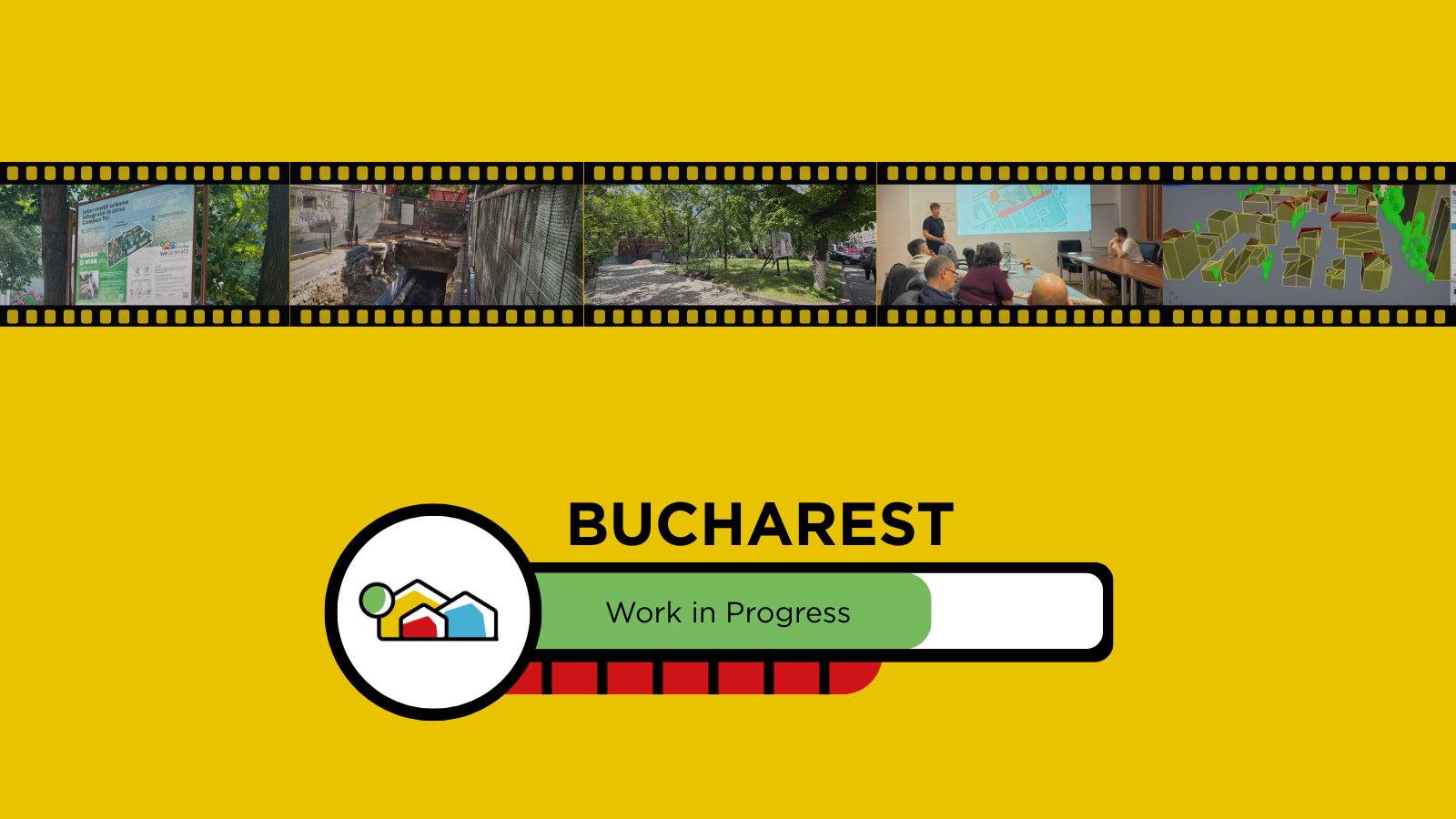
Physical works are now progressing across the demonstration site. The infrastructure connection for the Shared Energy Center between the school and the canteen building has been established, laying the groundwork for campus-neighbourhood energy sharing. Existing site fencing has been removed to improve openness and accessibility, while sections of concrete pavement have been carefully removed and reused, reflecting the project's commitment to circular economy principles. Installation of geothermal heat pump boreholes has also been completed, representing a key step towards the deployment of the renewable energy system. In parallel, administrative procedures continue for the planned pedestrianisation of Dorin Pavel Street.
Alongside the physical transformation of the site, Bucharest has continued developing its Digital Twin. Simulations have been expanded to include the three main buildings within the demonstration area, together with representative models of individual houses and apartment blocks. These digital models support the assessment of building energy performance, greenhouse gas emission reduction potential and the feasibility of local energy sharing, providing valuable evidence to guide future interventions.
Together, these achievements represent a significant step forward for the Bucharest demonstration. By successfully moving from planning into implementation while advancing both physical infrastructure and digital planning tools, the city is creating the foundations for a more sustainable, energy-efficient and people-centred neighbourhood.
SHARE THIS ARTICLE