14.07.2026
WeGenerate Showcases Research on People-Centred Urban Regeneration at ZCBE 2026
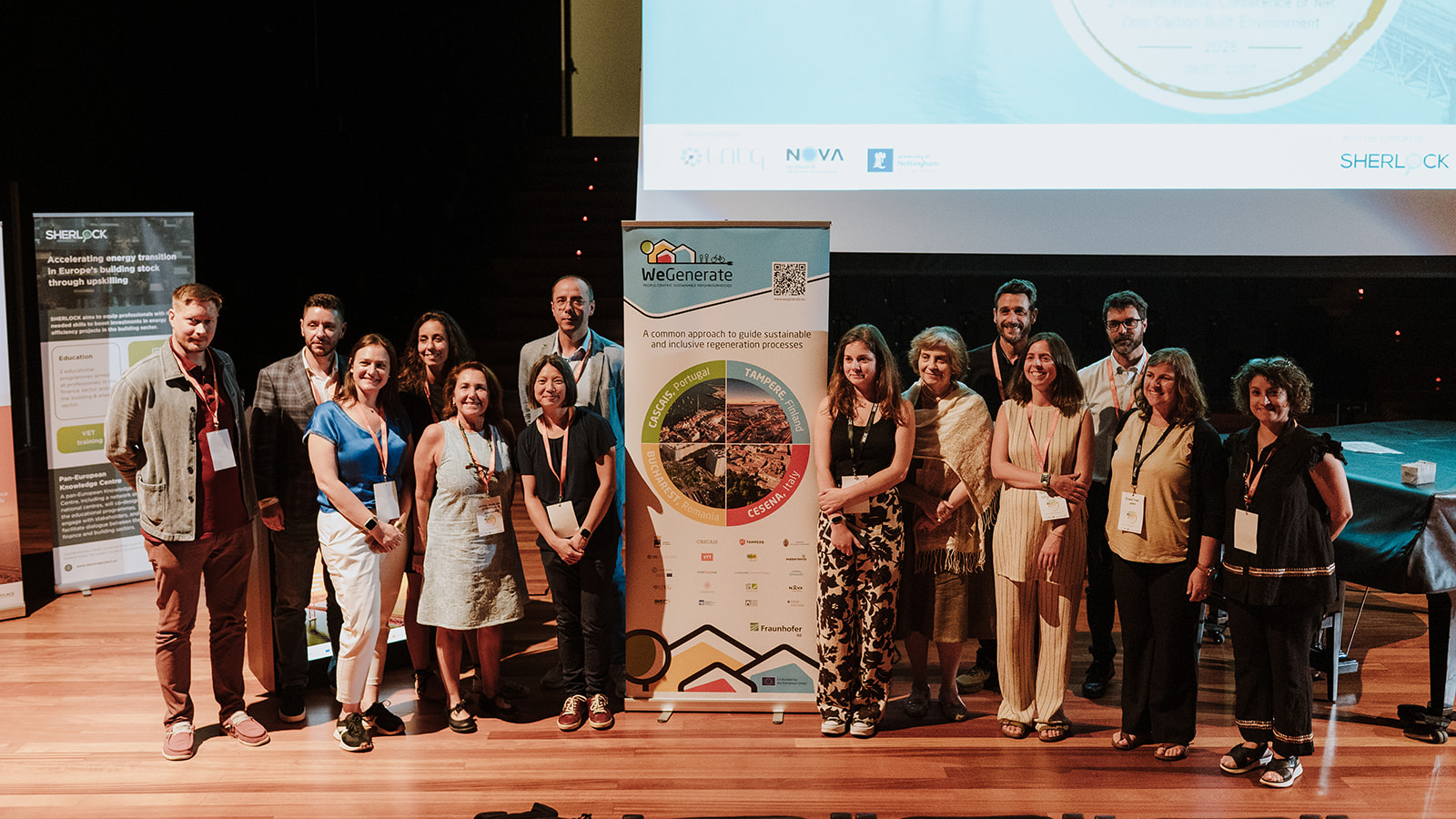
WeGenerate researchers showcased the project's latest scientific advances at the 2nd International Conference on Zero Carbon Built Environment (ZCBE 2026), held in Lisbon, Portugal, on 9–10 July 2026. Through a dedicated technical session, the project presented research on people-centred urban regeneration, digital innovation, citizen engagement and inclusive energy transition.
The session, "WEG – People-Centric and Sustainable Urban Regeneration", brought together researchers from across the WeGenerate consortium to present eight scientific papers reflecting the project's multidisciplinary approach to creating sustainable, climate-neutral neighbourhoods.
The session opened with the presentation of the WeGenerate Impact Model, a people-centred Key Performance Indicator framework designed to assess neighbourhood-scale regeneration. The framework combines environmental, social, economic and digital indicators to support the evaluation of zero-carbon neighbourhoods while placing citizen participation and quality of life at the centre of the transition.
Several presentations focused on addressing energy poverty through inclusive energy communities, using the WeGenerate demonstration site in Cascais, Portugal, as a case study. Researchers presented evidence on how renewable energy communities, combined with building improvements and citizen engagement, can reduce energy costs, improve comfort and support a more equitable energy transition.
Digitalisation also featured prominently throughout the session. Researchers examined the role of Urban Digital Twins in supporting sustainable urban planning, discussing both their potential and the challenges of integrating these tools into municipal decision-making. Complementing this work, another presentation introduced a CityGML-based digital twin methodology being developed for the regeneration of the INA-Casa Vigne neighbourhood in Cesena, demonstrating how advanced digital models can support neighbourhood-scale retrofit planning.
Citizen participation remained a central theme across the programme. One presentation introduced an engagement strategy guideline developed within WeGenerate to help local authorities design effective participation processes for climate-neutral transitions, translating the concept of energy citizenship into a practical tool for urban practitioners.
The session also highlighted WeGenerate's integrated neighbourhood regeneration model, which combines spatial planning, energy performance, mobility, governance and social innovation into a structured framework currently being tested across the project's four demonstration neighbourhoods. Additional research explored how co-creation can support more integrated urban regeneration and examined the role of socially inclusive renewable energy communities in simultaneously advancing decarbonisation, reducing energy poverty and strengthening social cohesion.
The strong presence of WeGenerate at ZCBE 2026 demonstrates the project's ongoing contribution to scientific research on sustainable neighbourhood transformation. By sharing methodologies, case studies and practical tools developed throughout the project, the consortium is helping to advance knowledge and support the implementation of people-centred approaches to achieving climate-neutral cities across Europe.
Photo Credits: ZCBE 2026
SHARE THIS ARTICLE