14.09.2026
WeGenerate Publishes Third Policy Paper on Resilient and Inclusive Urban Mobility
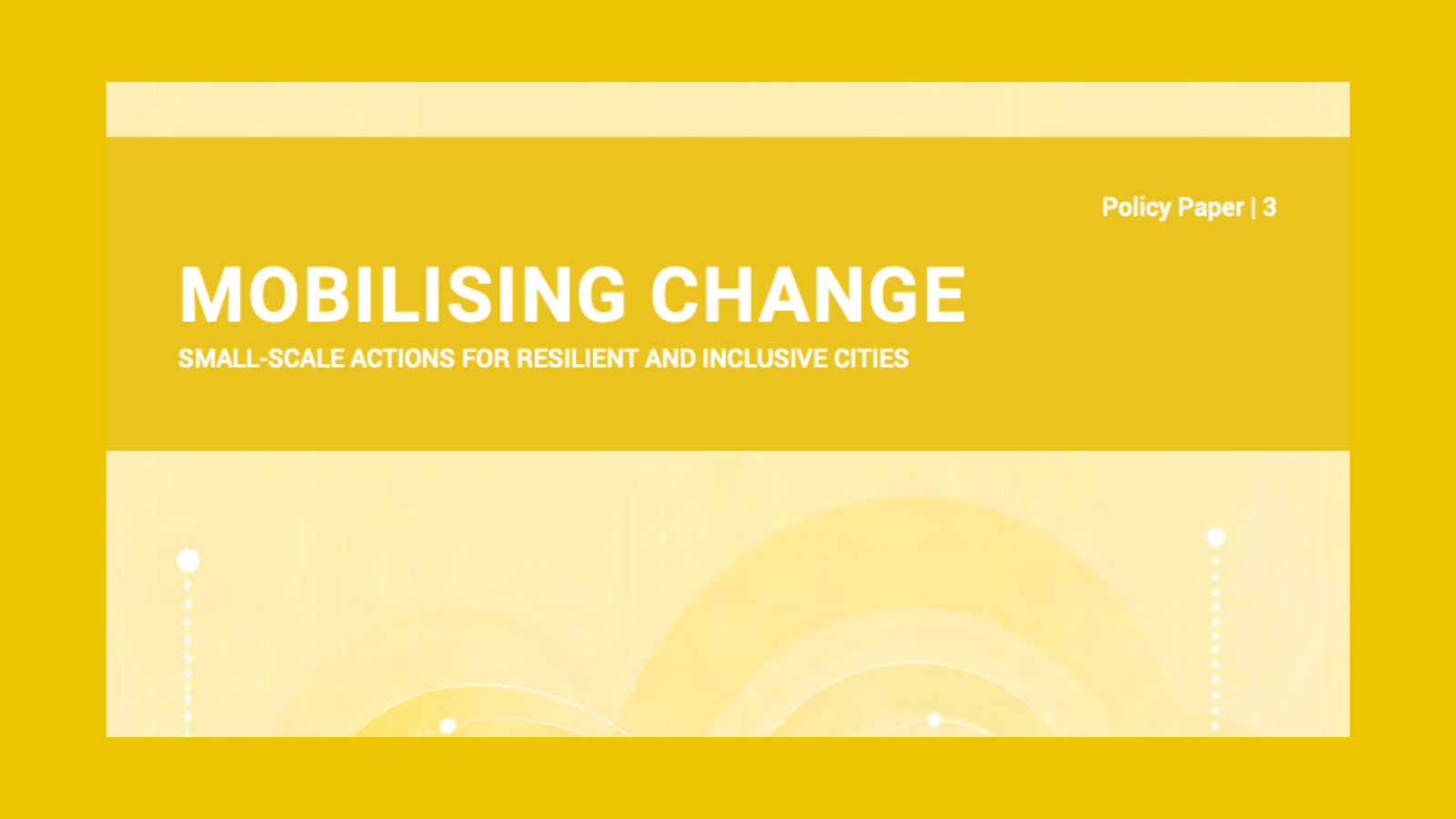
The WeGenerate project has released its third policy paper, Mobilising Change - Small-scale actions for resilient and inclusive cities, exploring how small-scale, digital and place-based urban regeneration actions can help cities build more sustainable, resilient and inclusive mobility systems.
Across Europe, mobility policies are increasingly moving beyond reducing car dependency towards creating multimodal, accessible and resilient transport systems. Yet many cities continue to face a gap between ambitious policy objectives and practical implementation. Limited funding and institutional capacity, competing demands for public space, political challenges and established travel behaviours can all slow progress towards sustainable mobility.
The new policy paper examines how Light Urban Regeneration Actions (LURAs) can help address this implementation gap. These relatively small-scale and adaptable interventions can include improvements to streets and public spaces, mobility hubs, digital mobility services, and new approaches to planning and governance. Rather than replacing major infrastructure investments, LURAs can complement them by allowing cities to test solutions, generate local knowledge and create pathways towards longer-term transformation.
A central argument of the paper is that the value of small-scale interventions extends beyond their immediate physical impact. When embedded within wider mobility strategies and supportive governance structures, they can generate “ripple effects” that influence travel behaviour, build public and political support, strengthen institutional learning and contribute to wider mobility transitions.
The paper identifies three interconnected areas where LURAs can support this process:
• Active mobility: Improving streets and public spaces to make walking and cycling safer, more comfortable and attractive;
• Multimodality: Connecting public transport, walking, cycling and shared mobility through mobility hubs and digital services, creating more seamless travel chains;
• Systemic planning and governance: Using strategic planning, digital tools and data to coordinate mobility interventions and align them with wider climate, accessibility and social objectives.
The publication draws on evidence from the WeGenerate Demo Cities of Tampere, Cesena and Cascais, as well as Fellow Cities Liepāja and Cartagena. Together, these experiences illustrate how locally embedded actions can contribute to broader mobility transformation while responding to different urban contexts and user needs.
The paper also highlights the wider benefits that inclusive mobility interventions can generate, including improved accessibility, health and wellbeing, stronger social inclusion, more attractive public spaces and more resilient urban mobility systems. However, it stresses that small-scale actions should not be viewed as standalone solutions. Their strategic value lies in their ability to test approaches, generate evidence and create the conditions for wider change.
The publication concludes with recommendations for European, national and local policymakers. These include strengthening policy coherence and long-term funding at European level, creating enabling regulatory and financial conditions at national level, and adopting integrated, human-centred approaches at local level that use small-scale interventions as opportunities for learning and scaling.
Ultimately, Mobilising Change argues that sustainable and inclusive mobility transitions require both ambition and implementation capacity. When supported by coherent planning, multimodal systems and sustained investment, small-scale actions can act as catalysts for wider behavioural, institutional and systemic change.
Read the full policy paper and discover how small-scale urban regeneration actions can help create more sustainable, resilient and inclusive mobility systems.
SHARE THIS ARTICLE