02.10.2026
Meeting in Tampere to advance people-centred neighbourhood transformation
Last week, partners from across the WeGenerate consortium gathered in Tampere, Finland, for a two-and-a-half-day consortium meeting focused on sharing progress, exploring local innovations and advancing the project's work with Demo and Fellow Cities.
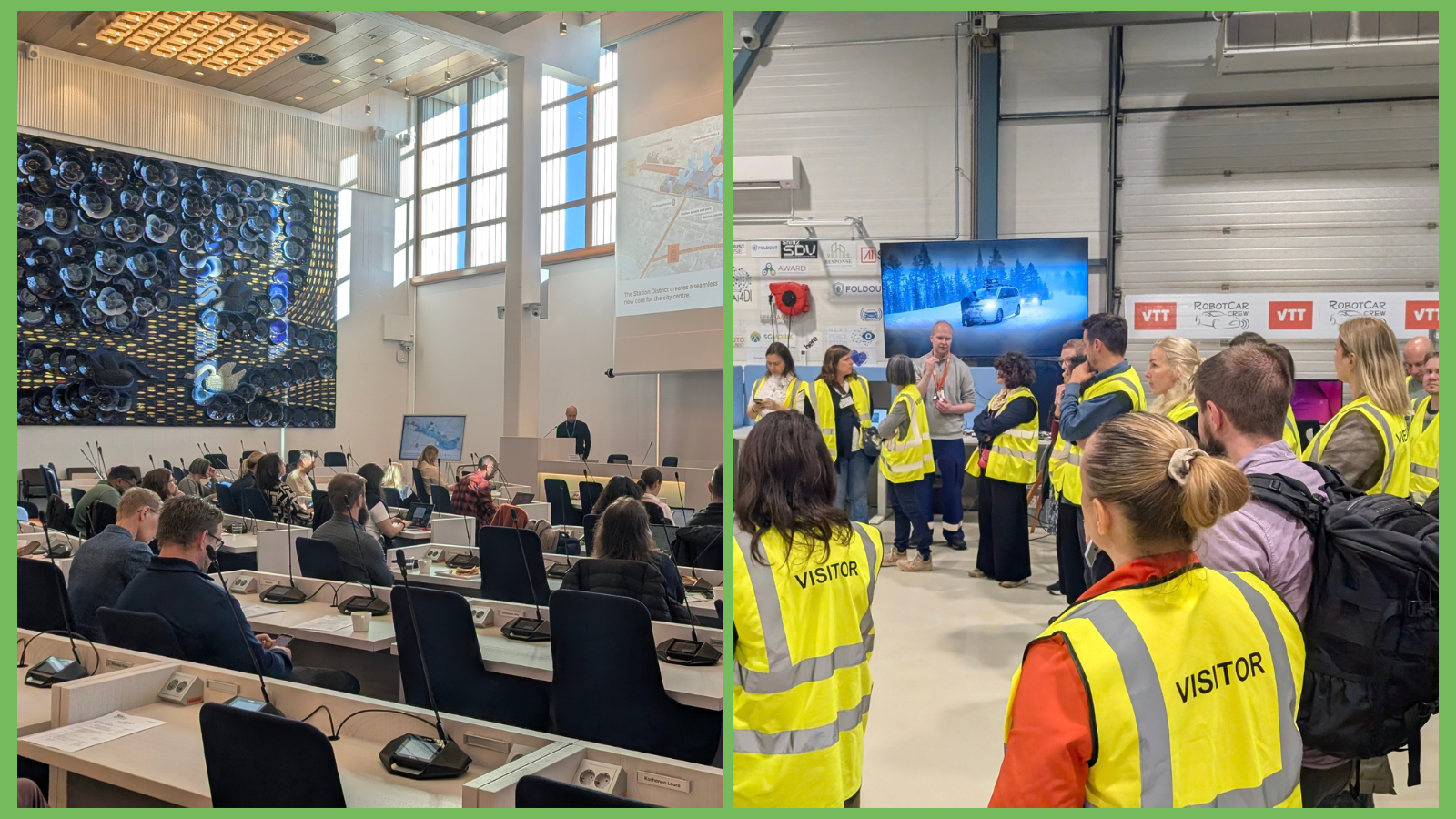
The meeting combined discussions at Tampere City Hall and VTT's facilities with site visits and hands-on activities. The programme offered partners the opportunity to connect ongoing project activities with Tampere's local experience in digitalisation, urban development, citizen participation and sustainable mobility.
Exploring Tampere's Culture District and Station District
The meeting opened with a walking tour of Tampere's Culture District, including a meeting with ZoneAtlas, the developer of the Culture District map. Partners learned more about the development of the district and how digital mapping can support understanding and communicating urban environments.
The tour highlighted how cultural venues, public spaces and local attractions form a connected district that can be explored both on foot and through the digital map developed by ZoneAtlas. It also highlights that local communities can be active change agents in transforming urban areas into attractive and interesting areas. Cities can support different communities in these initiatives in several ways, and it doesn´t always have to be money. This approach supports WeGenerate’s objectives by making local cultural opportunities more visible and helping people discover and engage with their neighbourhood.
The programme then turned to the Station District, where partners received an update on the current planning phase and plans for urban greenery. This was followed by a showcase of the Station District's digital twin, introducing partners to the tool and exploring how participatory methods can contribute to the design and refinement of digital tools for urban development.
The showcase introduced the Station District’s digital twin as a platform for visualising the area and supporting discussions about its development with the residents. Drawing on Tampere’s experiences with youth and older adults, the session highlighted the importance of involving different user groups in developing digital tools that are accessible, understandable and useful for participation.
The afternoon continued with an update on Tampere's next steps, including work on the CO2 Router, related resident campaigns and the extension of the digital twin, as well as multispecies urban planning. The planned integration of the CO₂ Router offers a further opportunity to connect the digital environment with residents’ everyday mobility choices.
Partners also explored the role of digital tools in citizen inclusivity during a session on Citiverse Building Blocks. The day concluded with an outdoor mystery game at Laikku, introducing participants to the design and activities behind the game.
The Laikku outdoor mystery game invites participants to explore the area through clues and tasks, combining play with discovery of the surrounding urban space. Within Tampere’s WeGenerate activities, it offers an engaging way to draw attention to local places and encourage people to use public space. The experience also highlighted practical lessons for similar interventions, including the importance of quality, testing and clearly agreed responsibilities for ongoing maintenance.
Sharing experiences and looking towards replication
On the second day, partners travelled to VTT's headquarters in Hervanta, where the programme focused on exploitation, knowledge exchange, replication and innovation.
An exploitation workshop led by EIT Urban Mobility Foundation provided an opportunity for WeGenerate partners to explore how project results can be taken further beyond the project's lifetime.
This was followed by a CityXChange session bringing together Demo and Fellow Cities. Partners shared experiences and updates, while collaborative activities supported the generation of solution ideas for the Fellow Cities: Liepāja, Zagreb, Cartagena, Kadıköy and Szombathely.
The afternoon continued with an Innovation Hub Knowledge Exchange Workshop, led by VTT's Sustainable Mobility Cluster, followed by a visit to VTT's Autonomous Driving Lab.
From local experience to transferable solutions
The final day focused strongly on replication and the development of practical guidance for cities.
A CityXChange Replication Dialogue explored how Tampere is building on the outcomes of the project's previous Site Visit, looking at what continues locally, what can be scaled, and which factors enable or constrain progress. The discussion also considered transferable insights for future energy transition pathways, including governance, financial and policy considerations.
The meeting then moved to the Urban WeGeneration Model, with a dedicated workshop focused on translating the model into a practical, step-by-step guidance package for cities. Building on previous model validation activities, partners worked with the Fellow Cities' intervention sites to identify common implementation bottlenecks and develop recommendations, enabling conditions and possible solutions.
The meeting concluded with a General Assembly session covering data management and data sharing, as well as project management updates and next steps.
Continuing the work together
Across three days, the Tampere meeting created space for partners to connect local experiences with the wider objectives of WeGenerate, exchange practical knowledge and work together on the tools, models and approaches that can support people-centred sustainable neighbourhood transformation.
With the project's Demo and Fellow Cities continuing to test and develop approaches in their local contexts, the discussions in Tampere provided another opportunity to strengthen collaboration and turn shared experience into practical knowledge that can be transferred to other cities.
SHARE THIS ARTICLE