28.05.2026
One year of progress: Cesena advances integrated neighbourhood regeneration
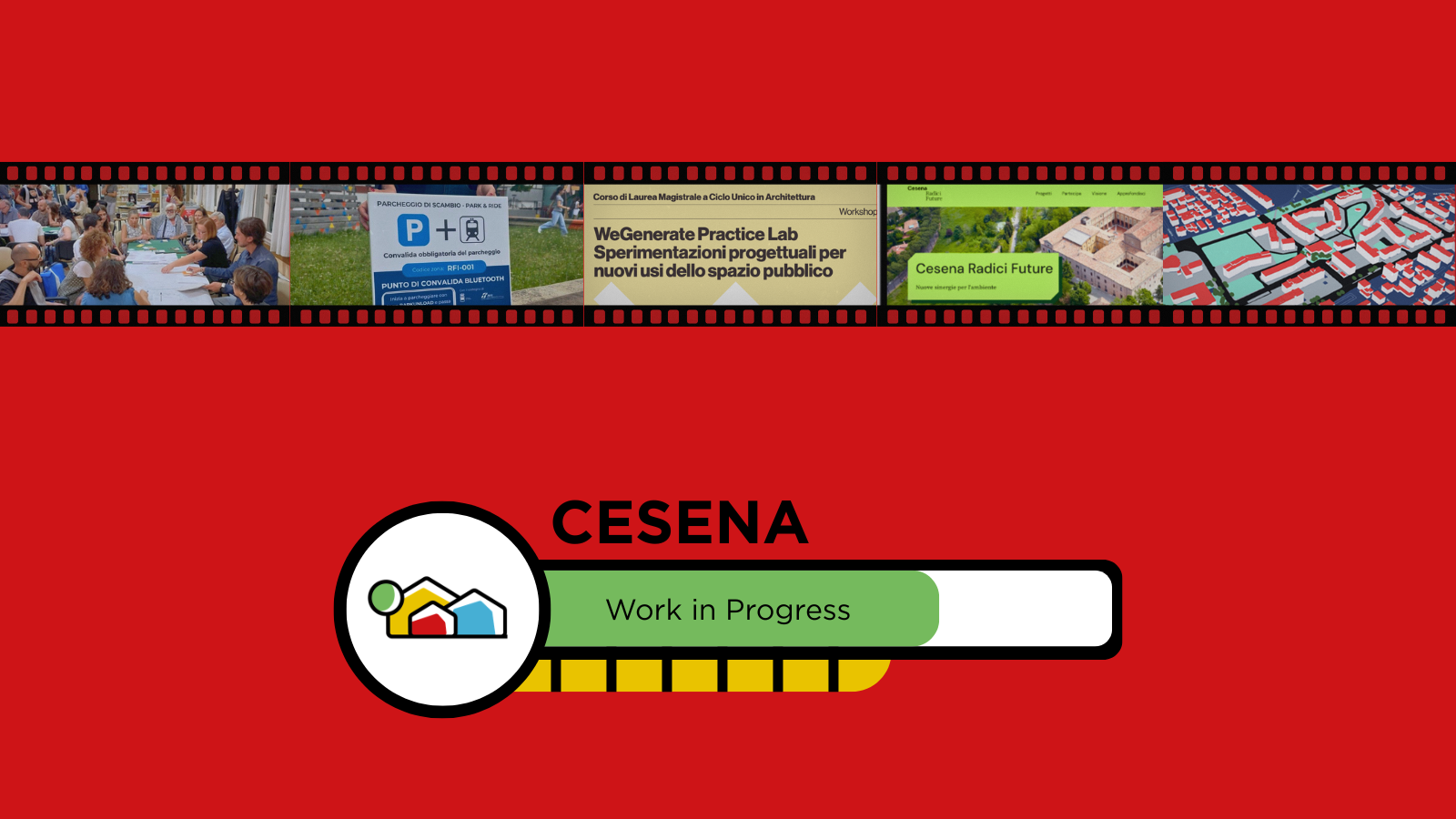
Over the past year, the WeGenerate demonstration in Cesena has brought together citizen participation, sustainable mobility, climate adaptation and digital innovation to advance the regeneration of the Vigne–Railway district. Through an integrated approach, the city has strengthened collaboration between residents, schools, researchers and local authorities while preparing the neighbourhood for a more sustainable and climate-neutral future.
A key achievement has been the extensive participatory process that has shaped the regeneration strategy. Public workshops, community events, urban walks and digital roundtables invited residents to share ideas on mobility, public spaces, environmental quality and urban transformation. At the same time, schools across the district became active contributors to the process, with pupils and students of different ages exploring future visions for their neighbourhood through workshops, creative activities and collaborative projects. Together, these initiatives have ensured that local knowledge and community priorities remain at the centre of the regeneration process.
Sustainable mobility has also advanced significantly. In May 2025, Cesena launched its Park & Ride pilot service, offering dedicated parking spaces for rail commuters and encouraging more sustainable travel choices. Supported by a targeted communication campaign and continuous monitoring, the service quickly attracted growing demand, leading to its expansion with a second pilot location in early 2026. Meanwhile, work has continued on the future Bike Station, supported by citizen engagement activities, exchanges with other municipalities and the analysis of best practices to develop a service that responds to local mobility needs.
Another important milestone has been the co-design of new climate-adaptive public spaces. Drawing on ideas collected from residents, schools and local stakeholders, the University of Bologna led an interdisciplinary design process that brought together students, researchers and urban regeneration experts to develop a temporary greening intervention for the neighbourhood. The project combines nature-based solutions with flexible public space design, demonstrating how collaborative design can improve environmental quality while creating new places for social interaction.
These physical interventions have been supported by scientific analysis. Using ENVI-met software, researchers carried out detailed microclimatic simulations to identify heat-stress hotspots and assess how greening measures could improve outdoor thermal comfort. Combined with environmental monitoring data collected from local weather stations, these analyses provide evidence to support climate-resilient urban design and future regeneration decisions.
Digital innovation has progressed in parallel. Development continued on CesenaRadiciFuture, a new online platform designed to communicate the city's regeneration journey, make environmental information more accessible and encourage active citizenship. Extensive work has also been carried out on Cesena's Urban Digital Twin, including the expansion of the underlying database, the refinement of its three-dimensional visualisation and the collection of detailed building and energy data for the Vigne neighbourhood. Together, these digital tools will support the simulation and evaluation of future renovation scenarios while strengthening communication between the municipality and the local community.
Taken together, these achievements demonstrate Cesena's integrated approach to neighbourhood regeneration, where citizen participation, sustainable mobility, climate adaptation and digital technologies reinforce one another. By combining practical interventions with long-term planning and digital innovation, the city is creating a model for more resilient, inclusive and climate-neutral urban development.
SHARE THIS ARTICLE