29.05.2026
One year of progress: WeGenerate strengthens the capacity of its Fellow Cities
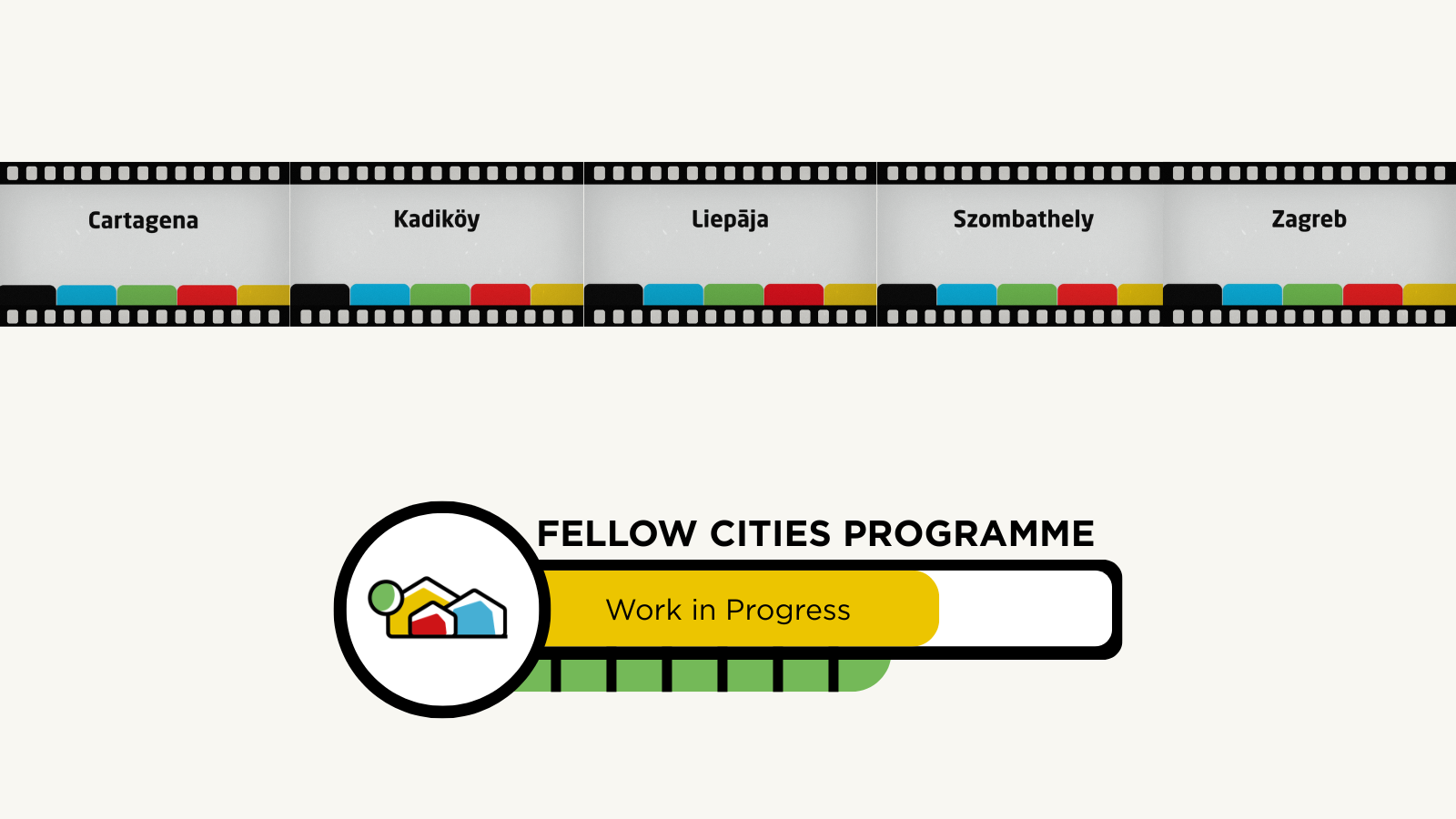
Over the past year, WeGenerate has continued supporting its five Fellow Cities - Cartagena, Kadıköy, Liepāja, Szombathely and Zagreb - as they prepare to replicate the project's innovative approaches to neighbourhood regeneration. Through a structured programme of training, peer learning and coaching, the cities have strengthened their capacity to adapt WeGenerate solutions to their own local contexts, laying the foundations for long-term impact beyond the project's four Demo Cities.
A major focus of the past year has been knowledge exchange. Representatives from the Fellow Cities took part in a comprehensive programme of study visits, technical training and online collaboration designed to share practical experiences from the WeGenerate demonstrations. A key milestone was the two-day Study Visit and Digital Twin Training hosted by Tampere in September 2025, where participants explored how digital twins can support urban regeneration, citizen engagement and data-driven decision-making. Delivered by leading experts alongside the City of Tampere and project partners, the programme combined technical sessions with practical demonstrations and site visits, giving participants practical knowledge that they can adapt and apply within their own cities.
Learning continued through the WeConnect exchange programme, which brought together Demo and Fellow Cities in a series of thematic online sessions throughout the year. Discussions covered topics including sustainable mobility, digital twins, replication planning and the emerging Urban WeGenerate Model, while a dedicated CityXchange peer-learning session provided an additional opportunity for cities to share implementation experiences, discuss common challenges and learn from one another.
This ongoing exchange has directly supported the development of the Replication Roadmaps for each Fellow City. Designed to translate the lessons emerging from the WeGenerate demonstrations into locally relevant regeneration pathways, the roadmaps provide a structured approach for adapting the project's solutions to different urban contexts. During the reporting period, a common methodology was agreed and the first sections of each roadmap were completed, including analyses of local policy frameworks, neighbourhood characteristics, stakeholder ecosystems and opportunities for replication. Coaching sessions also helped cities identify potential actions inspired by the WeGenerate demonstrations, with particular interest emerging around digital twins alongside citizen participation, sustainable mobility and the built environment.
The Fellow Cities have also contributed to shaping the Urban WeGenerate Model, a practical framework that captures the knowledge and experience generated across the project. Through dedicated workshops and validation activities, they helped assess how the model could be applied in cities with different needs, priorities and governance contexts. Their feedback is helping refine the methodology that will ultimately form the Urban WeGenerate Guidance Package, ensuring that it is both flexible and transferable for wider use.
Together, these achievements demonstrate that replication is about more than transferring individual solutions. It is about equipping cities with the knowledge, skills and methodologies needed to shape their own pathways towards climate-neutral, people-centred neighbourhoods. As the project moves into its next phase, the Fellow Cities are well positioned to transform what they have learned into locally tailored actions, extending the impact of WeGenerate far beyond its demonstration sites.
SHARE THIS ARTICLE